1. What does a mobile cargo inspection system actually scan?
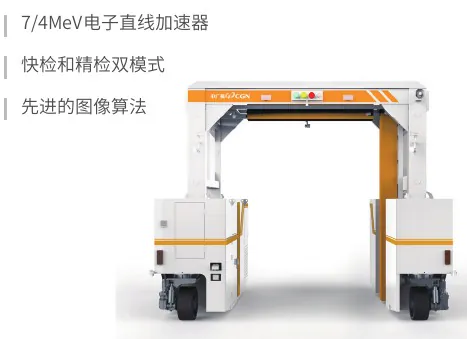
A mobile cargo inspection system images whole trucks, trailers and ISO containers from a self-contained unit — on most designs built on a commercial truck chassis with a deployable boom that unfolds on site. The vehicle drives past the beam, or drives through the portal, and the operator reviews the resulting image of what is inside the cargo, without opening a single carton.
Because the unit carries its own power generation, operator room, image review station and image archive, the site needs no inspection hall and no concrete foundation. That is the whole point of the mobile form: the inspection capability arrives with the machine instead of waiting for construction. Typical duty is customs yards, border checkpoints, bonded zones, rail freight yards and ports where a lane is needed quickly, moved often, or used only part of the year.
2. How does high-energy X-ray container screening work?
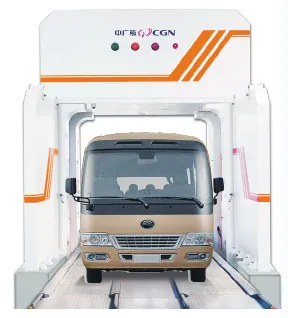
A high-energy X-ray source on one side of the lane fires through the vehicle and the cargo; a detector array on the opposite side measures how much radiation arrives. Dense material — steel frames, machinery, engine blocks — absorbs more and appears dark, while organic cargo absorbs less and appears lighter. The result is a transmission image of the loaded container, generated while the vehicle keeps moving.
The image is then processed for edge enhancement and contrast before an analyst reads it, and dual-energy systems add material discrimination: organic, inorganic and metal content are colour-coded so a false compartment behind a wall of bagged goods stands out. Centralized review software lets one team read images from several lanes, and AI-assisted screening marks suspicious regions for a closer look. Nothing is unloaded unless the image gives a reason to.
3. Fixed, mobile or combined: how do the three deployments compare?
The three configurations share the same imaging core and differ in how the lane is built and staffed. Compare them on the axis that actually constrains your project — the site, not the price list.
- Fixed lane — the scanner is installed permanently in an inspection hall or dedicated lane, with a foundation, shielding and a stable power supply. Highest throughput and lowest cost per inspected vehicle, but the project includes civil works and a construction schedule.
- Mobile unit — the complete system travels on a truck, deploys on arrival and can be reassigned to another checkpoint. No hall, no foundation, no shielding walls to pour. Throughput per lane is lower than a fixed portal, because each scan is driven and observed by the crew rather than fed by a permanent traffic flow.
- Combined deployment — a fixed lane at the main gate for daily volume plus one mobile unit for surge periods, satellite gates or temporary checkpoints. Common in port and customs projects where the traffic pattern changes seasonally.
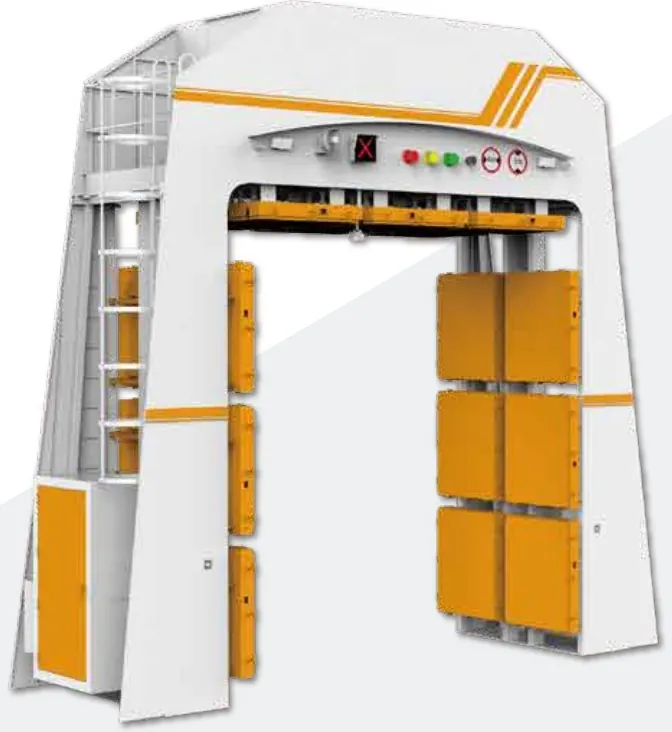
- Relocatable gantry — a modular portal that can be dismantled and re-erected at another yard. It still needs a prepared pad and power at each site, so treat it as a fixed lane you can move occasionally, not as a mobile unit.
4. Which numbers decide throughput and image quality?
Marketing pages describe imaging as "clear" or "high definition". A datasheet you can hold a supplier to looks different. Check these five figures, and check them for the model and mode you will actually run.
- Steel penetration — how much steel the beam still sees through. Mobile high-energy cargo systems from major vendors publicly quote figures in the region of 250–320 mm of steel; loaded containers with machinery or scrap need far more penetration than palletised consumer goods. Compare that figure only at equal beam energy.
- Scan mode and throughput — portal drive-through, stationary free-scan and occupied-cab modes give very different vehicles-per-hour. Ask for throughput in vehicles per hour for your mode, not the best-case mode in the brochure.
- Material discrimination — dual-energy colour coding of organic, inorganic and metal. This is what makes a hidden compartment readable behind dense cargo.
- Image processing and AI review — zoom, edge enhancement, negative/positive inversion and AI marking of suspicious regions all shorten the time an analyst spends per image, which is often the real throughput limit.
- Radiation dose per inspection and per year — the safety envelope for the crew and, where permitted, for scanned occupants. Ask for the figure and the compliance statement that goes with it.
5. What does the site need before a mobile system arrives?
A mobile system removes the hall and the foundation from the critical path, not the planning. Four items still need to be settled before the truck rolls in.
- A straight running lane and enough space to park the unit and its control room, with ground bearing capacity for a loaded truck plus the scanner vehicle.
- Power: most units are self-contained with an on-board generator; some can run on shore power. Confirm which, and confirm fuel logistics if the site is remote.
- Radiation safety: a controlled exclusion zone around the beam, barriers or signage, a radiation protection survey at commissioning and licensed operators where local rules require them. Rules differ by country, so verify against your own regulator before you choose a model.
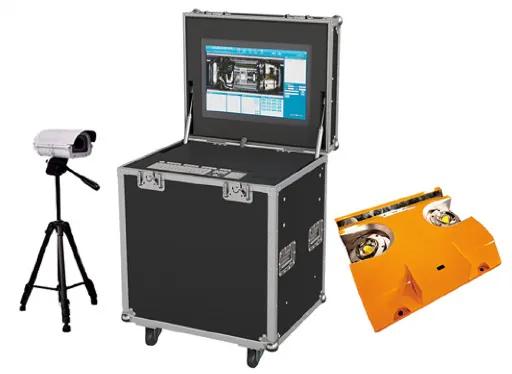
- Network and review workflow: image archive, remote review and integration with the lane systems you already run — plate recognition, under-vehicle inspection, barriers and bollards, weighbridges.
6. How do buyers actually choose between them?
Five questions settle the configuration in most customs, port and border projects.
- How many vehicles per day, and what is the peak hour? Heavy permanent volume argues for a fixed lane.
- Is the checkpoint permanent, or does it move with operations, seasons or events? Mobility argues for the mobile unit.
- What is in the cargo? Dense machinery, scrap and refrigerated units demand more penetration than textiles or packaged food.
- What does the site allow? If the land is leased, congested or lacks reliable power, a mobile unit is usually the only option that can go live this quarter.
- What will you integrate? If the cargo lane must talk to an existing security platform, check the interface list before signing — retrofitting integration is where budgets slip.
7. What must be in the quotation and the datasheet?
Ask for the technical datasheet for the exact model, in writing, with the penetration figure, beam energy, scan modes, throughput per mode, image processing functions and radiation dose. Ask for a real scan image of a loaded container — ideally one with a test object hidden inside — rather than a rendered illustration.
Then check the commercial scope: delivery, on-site commissioning, operator training, warranty length and spare-parts list, plus the export and customs documentation for high-energy equipment. A quotation that lists the machine only is not a quotation you can budget from.
SECUGUARD manufactures cargo and container vehicle inspection systems in fixed, mobile and combined configurations, with centralized review and AI-assisted screening. Send us your lane layout, traffic figures and cargo mix and we will tell you which configuration fits — and send the datasheet for it.