Specification Guide
Metal Container Inspection System: What to Specify Before You Ask for a Quote
A metal container inspection system is bought against a screening requirement, not a catalogue number. Every row below changes the machine, the civil works or the review workflow — send us the answers and the quotation becomes a matched specification instead of a generic price list.
| Scan target | Containers and cargo vehicles, scanned as a full vehicle without unloading — no devanning at the gate |
|---|
| Ray source | High-energy X-ray with clear imaging. Steel penetration is a project variable on this machine class: tell us the thickness the machine has to see through and we confirm it against the model drawing |
|---|
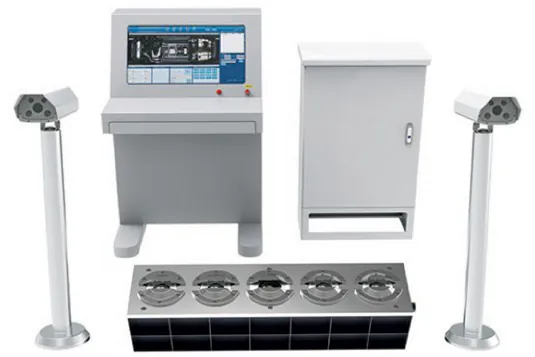
| Imaging & review | Full-vehicle imaging with centralized image review and AI-assisted screening, so only suspicious loads go to manual inspection |
|---|
| Check time | Minutes per vehicle on a drive-through lane (typical for this class) |
|---|
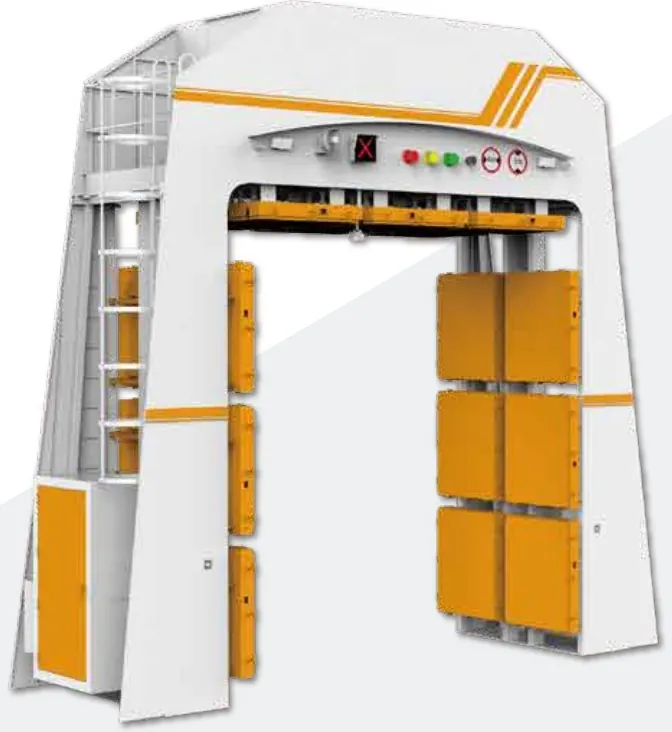
| Portal opening | Set by the largest vehicle in your fleet — send the vehicle envelope (height × width) and the tunnel dimension is fixed on the GA drawing |
|---|
| Throughput target | Vehicles per hour at peak; this decides the number of lanes and review stations, not just the scanner |
|---|
| Radiation protection | Fixed installations need an inspection hall and radiation protection; the shielding design and safety documents are part of the project scope |
|---|
| Certification & warranty | CE, FCC and GB15210 certified configurations, 12-month warranty on the standard export build |
|---|
| Deployment | Civil works | Site readiness | Best suited to |
|---|
| Fixed | Inspection hall and radiation protection required | Longer cycle (hall, shielding, power) | Main inspection yards and routine high-volume supervision |
|---|
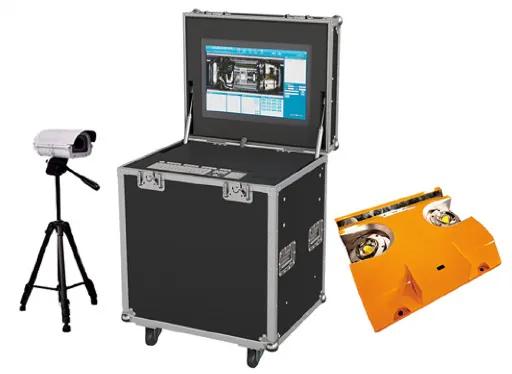
| Mobile | No hall required; deploys on arrival | Rapid site establishment | Temporary checkpoints, special operations, seasonal peaks |
|---|
| Combined | Fixed yard plus mobile units | Phased | A main yard with elastic capacity at secondary gates |
|---|
Steel penetration, portal dimensions and throughput are project variables on this machine class. Request the technical datasheet and we return a specification marked up against your site — not a generic brochure.
Choosing the Right System
Metal container or freight container? Matching the inspection system to the load
Searches for a metal container inspection system split into two different jobs: inspecting a steel or aluminium freight container and its cargo at a gate, or inspecting metal cans on a production line. The two need different machines, different site works and different suppliers. Find your row before comparing prices.
| What you are calling a “container” | What has to be inspected | Machine class that does it |
|---|
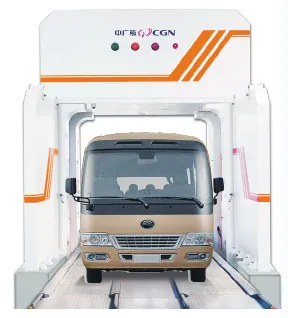
| Steel or aluminium ISO freight container on a truck, train or trailer | The sealed box and its declared cargo: concealment, undeclared or misdeclared goods, hazardous cargo, and anything hidden behind the doors | High-energy X-ray container / cargo vehicle scanner on a drive-through lane at a port, border or bonded zone — the system on this page. Fixed portal for routine volume, mobile or combined units for seasonal peaks and temporary gates |
| Metal cans, aerosols and tins on a production line | The container itself during manufacture: curling, triple seam, striations, fill level and foreign material, checked at line speed | In-line vision or side-view X-ray can inspection station, mounted over the existing conveyor with automatic rejection — a production QA machine, not a gate scanner, and it needs neither a drive-through lane nor an inspection hall |
| Air cargo pallets, ULDs and mail | Consolidated parcels and palletised freight inside a terminal | Lower-energy cargo X-ray with a conveyor lane, such as our X-ray baggage and parcel scanner |
Once you are on the freight-container row, the gate workflow is the same at every site — and it is where most specifications under-budget:
| Stage | What happens | What the site must provide |
|---|
| 1. Approach and queue | Vehicles queue to the scanner with the driver in the cab | Stacking length before the portal and a one-way traffic layout, so a rejected load can be diverted without blocking the lane |
| 2. Vehicle and document capture | The plate or container number is recorded and matched to the manifest | LPR or manual entry at the lane, and a link between the scan image and the declaration |
| 3. Drive-through scan | The vehicle passes through the portal and a full-vehicle image is produced without unloading | A portal opening sized to the largest vehicle in the fleet; radiation protection and an inspection hall for fixed installations |
| 4. Image review | Centralised review with AI-assisted screening flags suspicious loads; clear images are released without an operator | A review room networked back to the scanner and trained image analysts — in practice this is the bottleneck, not the scanner |
| 5. Release or manual inspection | Cleared vehicles leave; flagged ones are diverted for physical inspection | A secure search bay beside the lane and a documented escalation procedure for the operator's report |
How many lanes and review stations you need is set by peak vehicles per hour, not by the scanner model. Pair the gate with under-vehicle inspection where the same lane also screens vehicle undersides, and send us your peak throughput and vehicle envelope for a matched lane layout.
Buying Guide
Container Inspection Systems: Machine-Based Transformation of Cargo Supervision
Port cargo supervision is shifting from manual unloading to machine-first inspection. Container systems support high-volume, high-precision checks with full-vehicle scanning.
01Supervision benefits of machine inspection
With full-vehicle scanning plus AI review, only suspicious targets undergo manual detailed checks — efficiency multiplied while concealment and misdeclaration detection strengthen, achieving "controlled and fast".
02Fixed + mobile combination
Fixed systems at main inspection yards for routine supervision; mobile systems at temporary checkpoints and special operations — elastic inspection capability.
Factory Direct
Why Buy Container Inspection System from a China Manufacturer?
As a professional Container Inspection System manufacturer and supplier in China, SECUGUARD offers factory-direct prices, wholesale options, OEM/ODM customization and complete export service. Contact us for the latest price list, technical datasheets and free samples.
- OEM/ODM customization: your logo, color and packaging
- CE, FCC, GB15210 certified with 12-month warranty
- Factory price + wholesale discount for distributors
- Door-to-door logistics with export documents support